

 Click:626Edit: Ruixiang Steel
 Time:2026-07-26 16:48:59
The designation "2B" is more than a simple aesthetic label; it is the result of a deliberate, multi-stage thermomechanical process designed to maximize the intrinsic properties of the stainless steel alloy.
The process commences with cold rolling, which reduces the thickness of the material while significantly increasing its yield strength. Following this reduction, the coils enter a continuous annealing furnace. Here, precision atmosphere control (typically nitrogen-hydrogen blends) is utilized to eliminate the work hardening induced during the cold reduction, restoring the material's ductility and crystalline uniformity.
Once annealed, the surface retains a layer of oxide scale. This is removed through a multi-stage electrolytic pickling line. By utilizing acid baths, we expose the underlying, chemically pure metallic surface—the 2D finish—providing the essential foundation for the subsequent surface refinement.
The critical differentiation between a standard pickled surface and a premium 2B finish lies in the skin-pass rolling step. In our facility, the 2D sheets undergo a final, light cold-rolling pass between highly polished, super-hardened rolls. The roll pressure is calibrated to achieve a surface roughness ($R_a$) within the $0.15\mu\text{m}$ to $0.40\mu\text{m}$ range. This mechanical "skinning" achieves three vital outcomes: it eliminates surface micro-peaks that impede cleaning; it removes the "Lüders bands" (stretcher strains) that plague inferior products during deep-drawing; and it optimizes the sheet for uniform laser cutting.
Quality in stainless steel must be quantifiable. Our internal laboratory performs rigorous testing on each heat batch to provide the empirical data our customers require.
As a factory-direct exporter, our service model solves the common pain points of international procurement. We utilize international-standard protective films, such as fiber-laser grades ranging from $70\mu\text{m}$ to $100\mu\text{m}$, selected based on the client's specific processing method. Every order is accompanied by a comprehensive EN 10204 3.1 Material Test Certificate, serving as the "passport" for the material.
The future of 2B stainless steel production lies in the fusion of metallurgical skill and machine vision. Our facility is transitioning to an AI-integrated surface detection system. By utilizing high-resolution cameras linked to neural networks, we aim to move beyond sample-based QC to 100% surface inspection, detecting microscopic slivers or roller marks before the material is even cut.
Q: Can 2B finish stainless steel sheets be used for food-grade applications?
A: Yes. Because the 2B surface is non-porous and smooth, it prevents food particles from adhering, making it the industry standard for commercial kitchens and food processing equipment.
Q: How does the 2B finish differ from the No. 4 brushed finish?
A: 2B is a mill finish produced by cold rolling and skin-passing; it is smooth but not directional. No. 4 is a mechanical abrasive finish that creates a directional, linear grain often used for aesthetic purposes.
Q: Why is "skin-passing" important for deep-drawing operations?
A: Skin-passing provides a uniform surface tension and improves the material's yield properties, which prevents the formation of "orange peel" or "stretcher strains" when the metal is stretched into complex shapes.


If you have any questions, please contact our online customer service staff immediately


 Tel:+86-132 8756 7777
 Email:ceo@ruixiangsteel.cn
 WhatsApp:+86-132 8756 7777
 Phone:+86-132 8756 7777
 Adds:701B, Shuntai Plaza 8th building,Jinan Area of the Pilot Free Trade Zone, China.


 Langue
 English
 русский
 Français
 Türkçe
 Español
 اللغة العربية
 Current Location: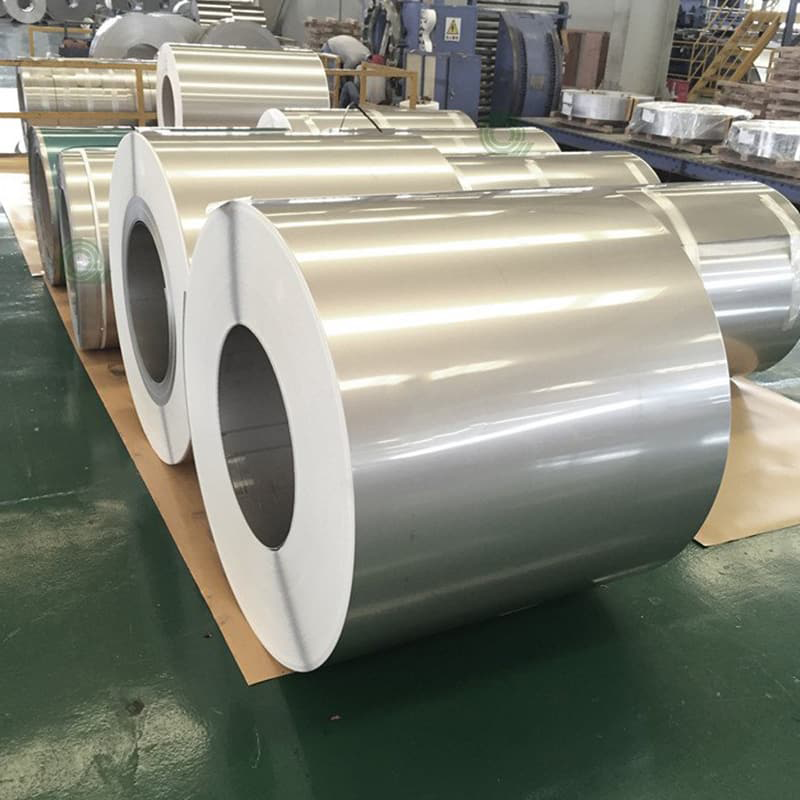
 Home
Home WhatsApp
 Email
Email