

 Langue
 English
 русский
 Français
 Türkçe
 Español
 اللغة العربية
 Current Location:
  Click:276
 Time:2026-01-27 11:33:00
How to Measure Zinc Coating Thickness on GI Pipes: A Professional Guide
For engineers and procurement managers, the zinc coating thickness is the single most important factor determining the lifespan of a galvanized steel pipe. But how do you verify if the pipe you received meets the specified Z275 or Z500 standards?
1. Magnetic Gauge Method (Non-Destructive)
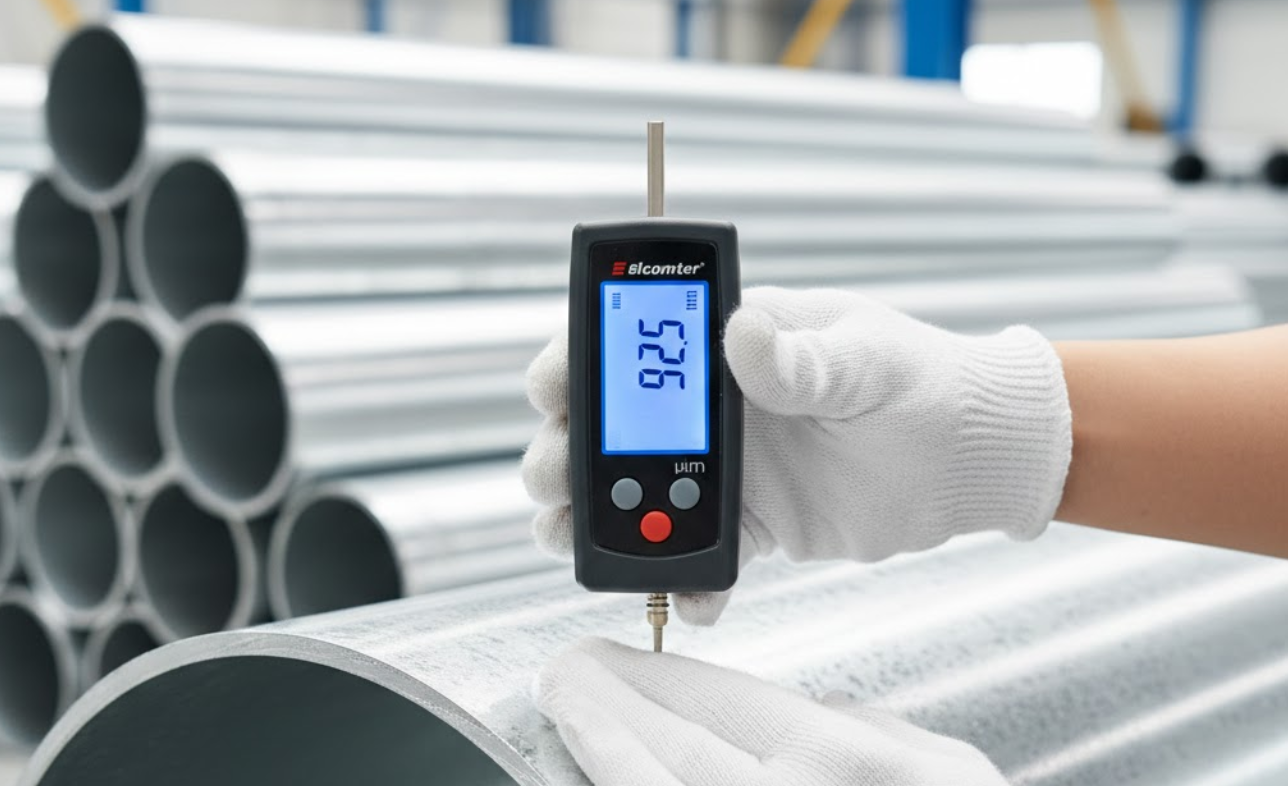
This is the most common field test. It uses magnetic induction or eddy current principles to measure the distance between the probe tip and the base steel.
- Pros: Fast, portable, and does not damage the pipe.
- Key Tip: Always calibrate the gauge on uncoated steel of the same thickness and shape before testing.
2. Weigh-Strip-Weigh Method (Destructive)
According to ASTM A90, this is the most accurate laboratory method. A sample is weighed, the zinc is stripped using acid, and the sample is weighed again.
Formula: Coating Weight (g/m²) = (Original Mass - Stripped Mass) / Surface Area
3. Microscopic Method (Cross-Section)
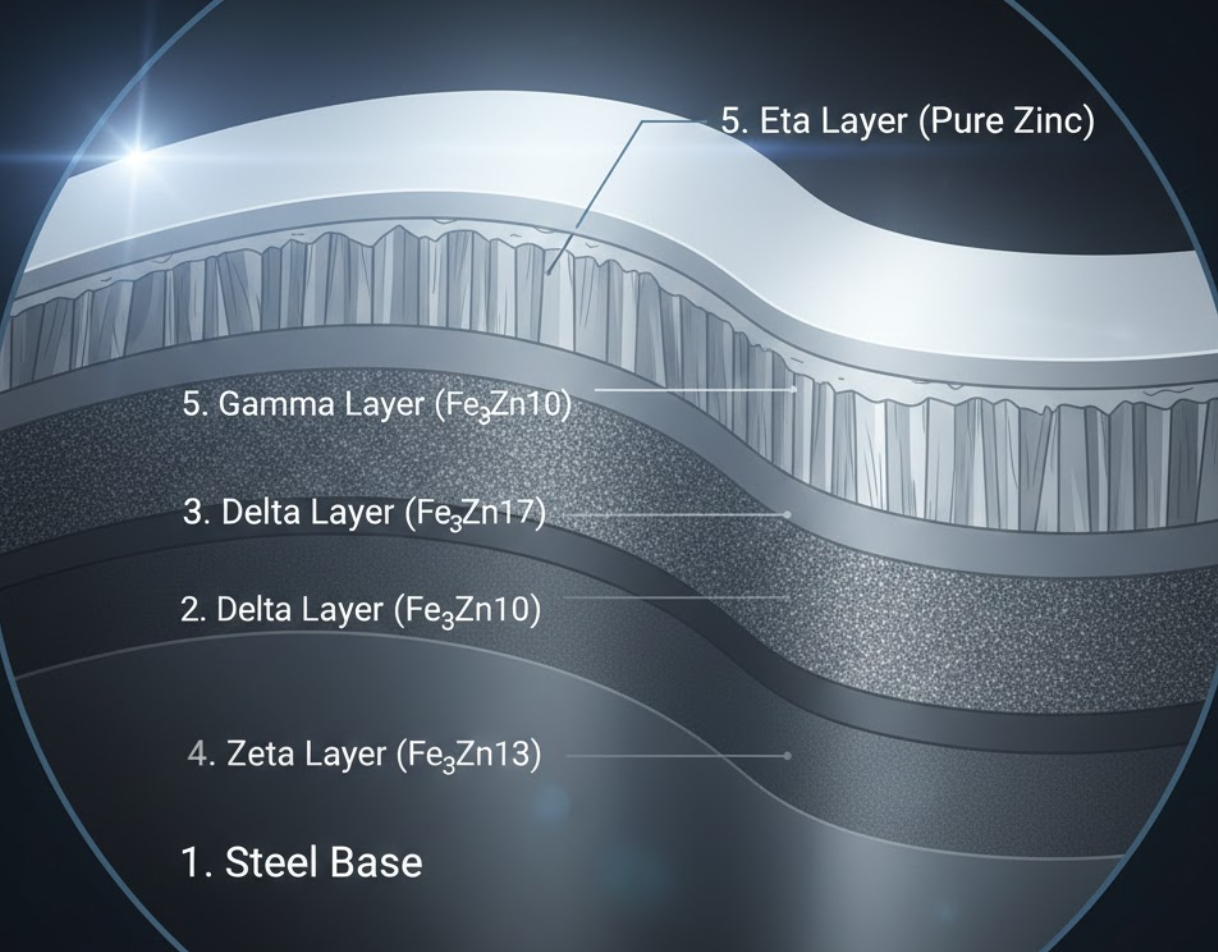
By cutting a cross-section of the pipe and examining it under a microscope, you can see the actual alloy layers (Eta, Zeta, Delta, and Gamma). This confirms the Hot-Dipped quality versus a simple electro-galvanized finish.
Why Quality GI Pipes Matter
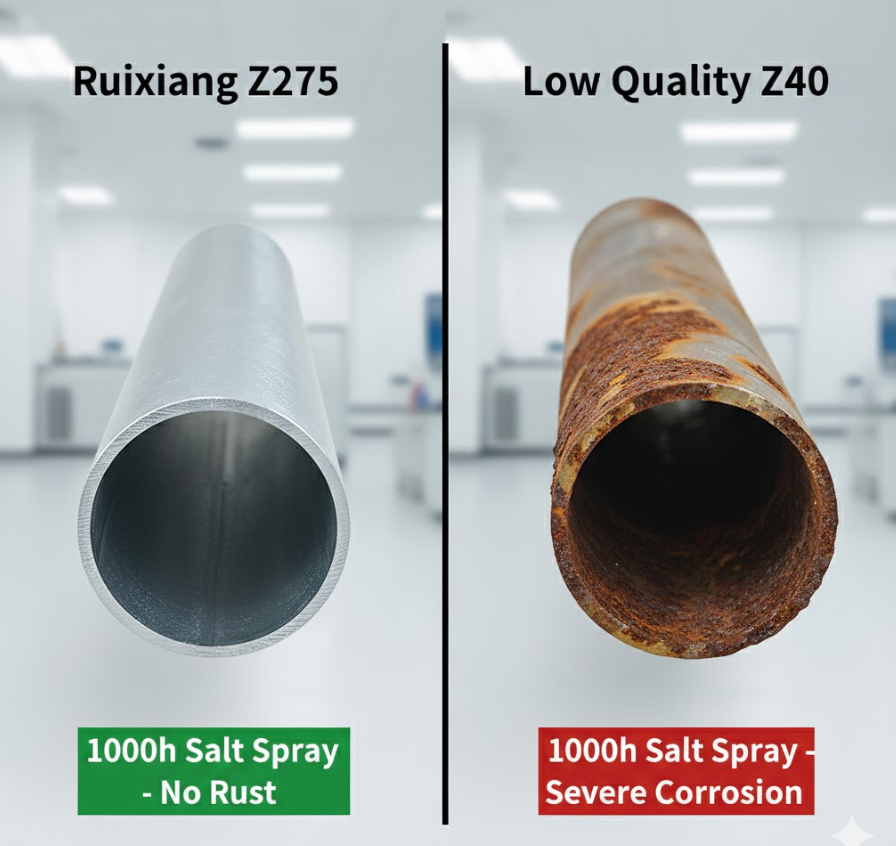
Low-quality pipes often have "thin spots" that lead to premature rusting. At Ruixiang Steel, we conduct rigorous ultrasonic and magnetic testing on every batch of Galvanized Steel Pipes to ensure 100% compliance with international standards.
Request a MTC (Mill Test Certificate)
Want to see the test results of our latest batch? Contact our technical team today.
Get Technical Support



 Tel:+86-132 8756 7777

 Phone:+86-132 8756 7777
 Adds:701B, Shuntai Plaza 8th building,Jinan Area of the Pilot Free Trade Zone, China.


 Home
Home WhatsApp
 Email
Email